– Claude AI, Chatgpt, Gemini
By Rajbir | ByteEarth | June 24, 2026 |
Everyone is asking the same question right now. Will AI replace my job?

It is one of the most searched topics on Google in 2026. People are worried. And honestly that worry makes sense. Every week there is a new headline about a company cutting staff . So the fear is real.
But here is the actual data tells a more complicated story than the headlines suggest. And once you look at the real numbers, things are not as black and white as most people think.
I took help the Claude with this query – “Will AI Replace Job? What the 2026 Data Actually Shows in USA” and it’s go through the latest reports from the World Economic Forum, the IMF, Goldman Sachs, and other major research bodies and pull report together what is actually happening right now in the USA. Here is what I found.
The Numbers People Are Sharing — And What They Actually Mean
Let us start with the big scary number everyone keeps quoting.
The WEF Future of Jobs Report projects that AI and automation will displace around 92 million jobs globally by 2030. That sounds terrifying. But the same report also says AI will create 170 million new jobs in the same period. That is a net gain of 78 million jobs worldwide.
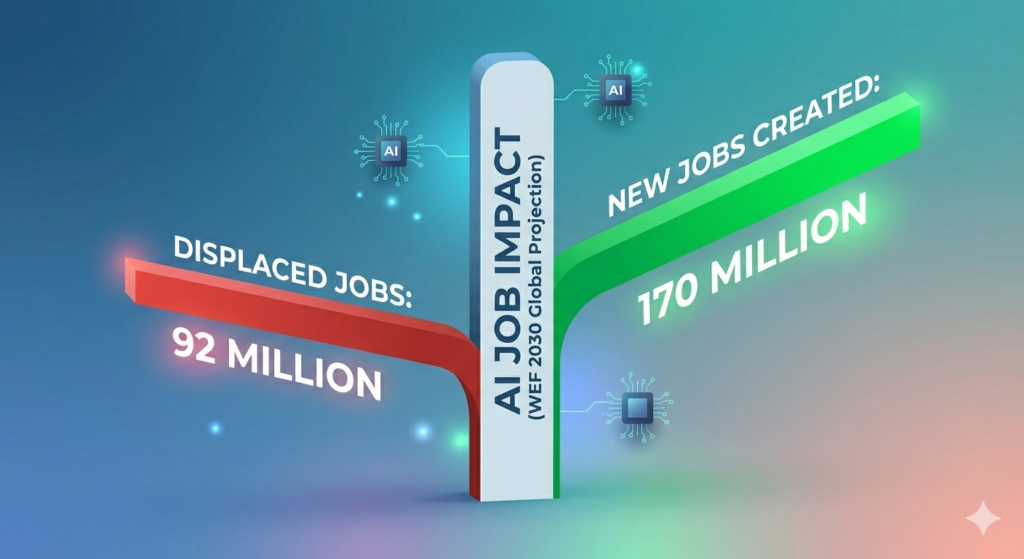
So right away, the full picture is very different from what most headlines show you.
The IMF has also been clear on this. Their analysis found that around 40% of all jobs globally are exposed to AI in some way. But there is a big difference between ” exposed to AI” and “replaced by AI.” Being exposed just means AI touches some part of what you do at work. It does not mean you are about to lose your job.
Which Jobs Are Actually at Risk Right Now
Let us be honest about this. Some jobs are genuinely at risk. And it is better to know the truth than to pretend everything is fine.
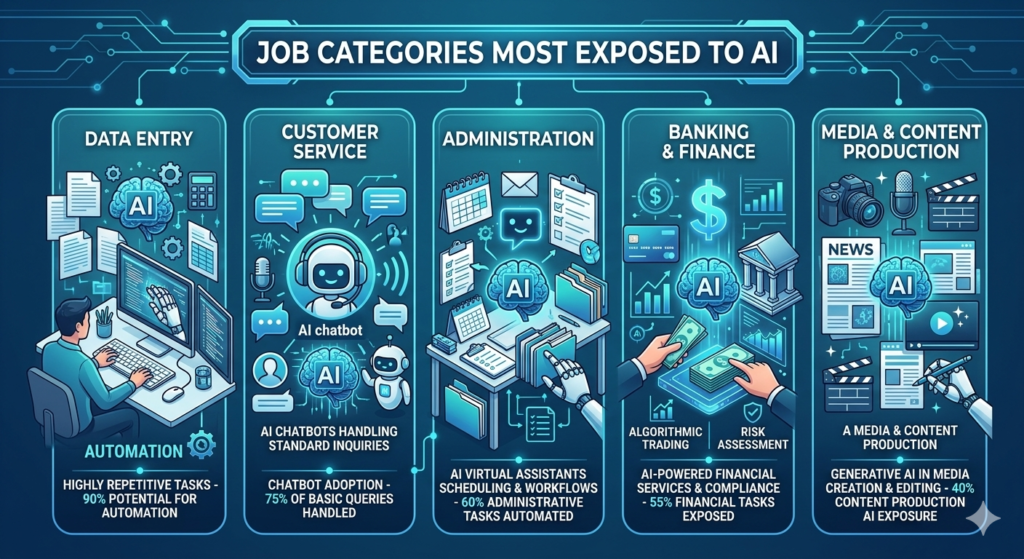
The roles facing the most pressure right now are the ones built around repetitive, predictable tasks. Think data entry, bank tellers, administrative assistants, customer service agents handling basic queries, and back-office processing jobs.
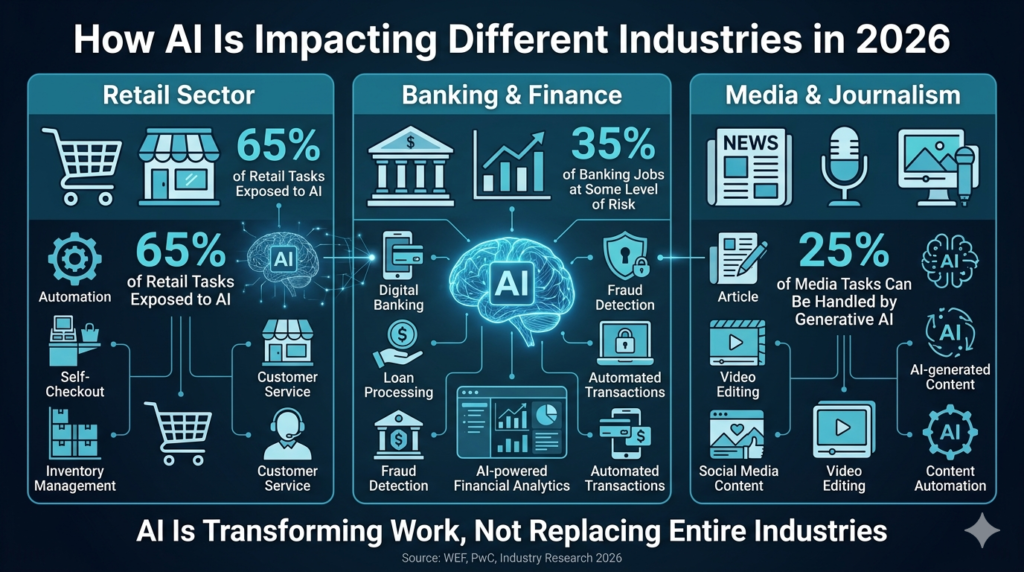
The pattern is consistent. Jobs that involve sitting at a computer and doing the same process over and over are the ones under the most pressure.
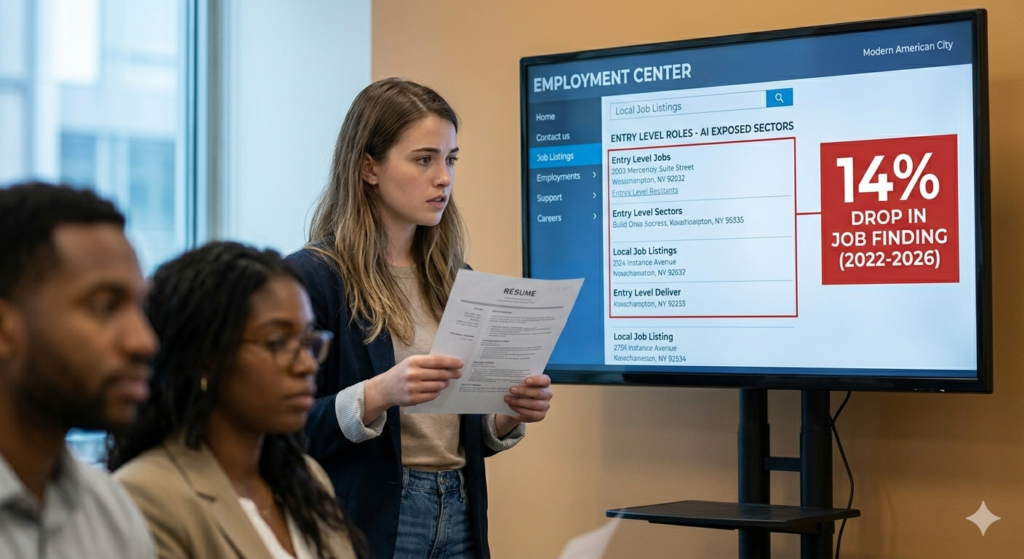
Reports also show that entry-level job postings in the USA dropped around 15% year over year. That is a real and meaningful shift. Younger workers aged 22 to 25 entering AI-exposed fields are already seeing the effects, with some data showing a 14% drop in job-finding rates since ChatGPT launched. (This information is collected with the help of Claude AI)

The Jobs AI Is Creating — And They Are Real
Here is the side of the story that gets less attention.
AI specialist job postings on LinkedIn grew 74% year over year. Demand for prompt engineers, AI trainers, machine learning specialists, and data scientists is going through the roof. The US Bureau of Labor Statistics estimates demand for data scientists alone will grow by 500,000 roles by 2032. (information pulled by Claude)

What This Means for You — 3 Practical Things to Do Now
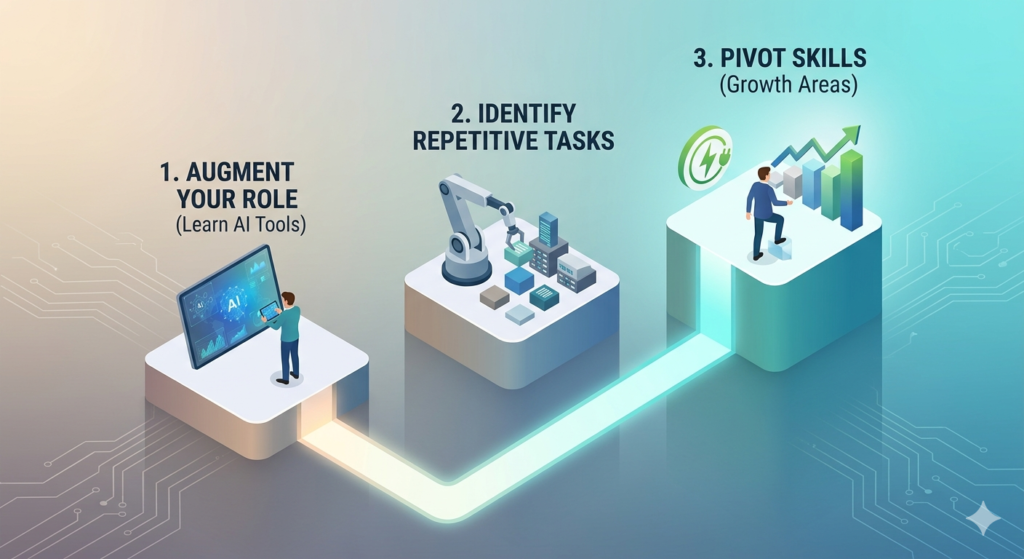
Here is the honest advice. Do not panic, but do not ignore this either. There are three things worth doing right now.
Learn to use AI tools in your current job. The biggest risk is not AI replacing you. It is someone who knows how to use AI replacing you. Every industry has AI tools available now. Start using them. Become the person in your team who knows how to get more done with AI. That makes you harder to replace, not easier.
Identify which parts of your job are repetitive. If a big chunk of your daily work involves doing the same task over and over with predictable inputs and outputs, that is the part most at risk. Being honest with yourself about this gives you time to prepare rather than react.
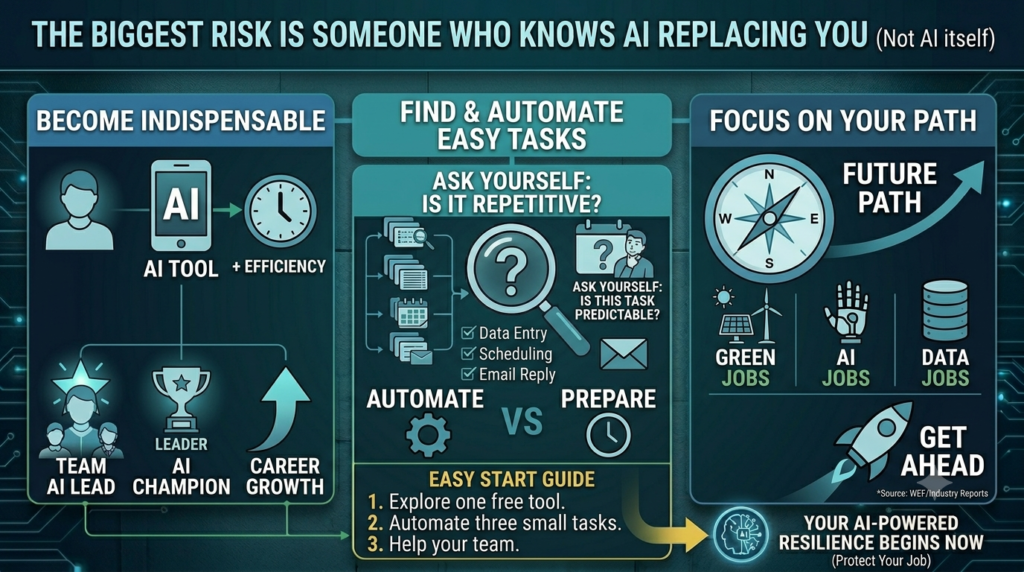
Look at what skills are growing in your industry. The WEF report is clear that green energy jobs, AI specialist roles, and data-related careers are the fastest-growing categories globally. Even if you are not in tech, most industries now have AI-adjacent roles emerging. Getting ahead of that curve matters.